Skip to content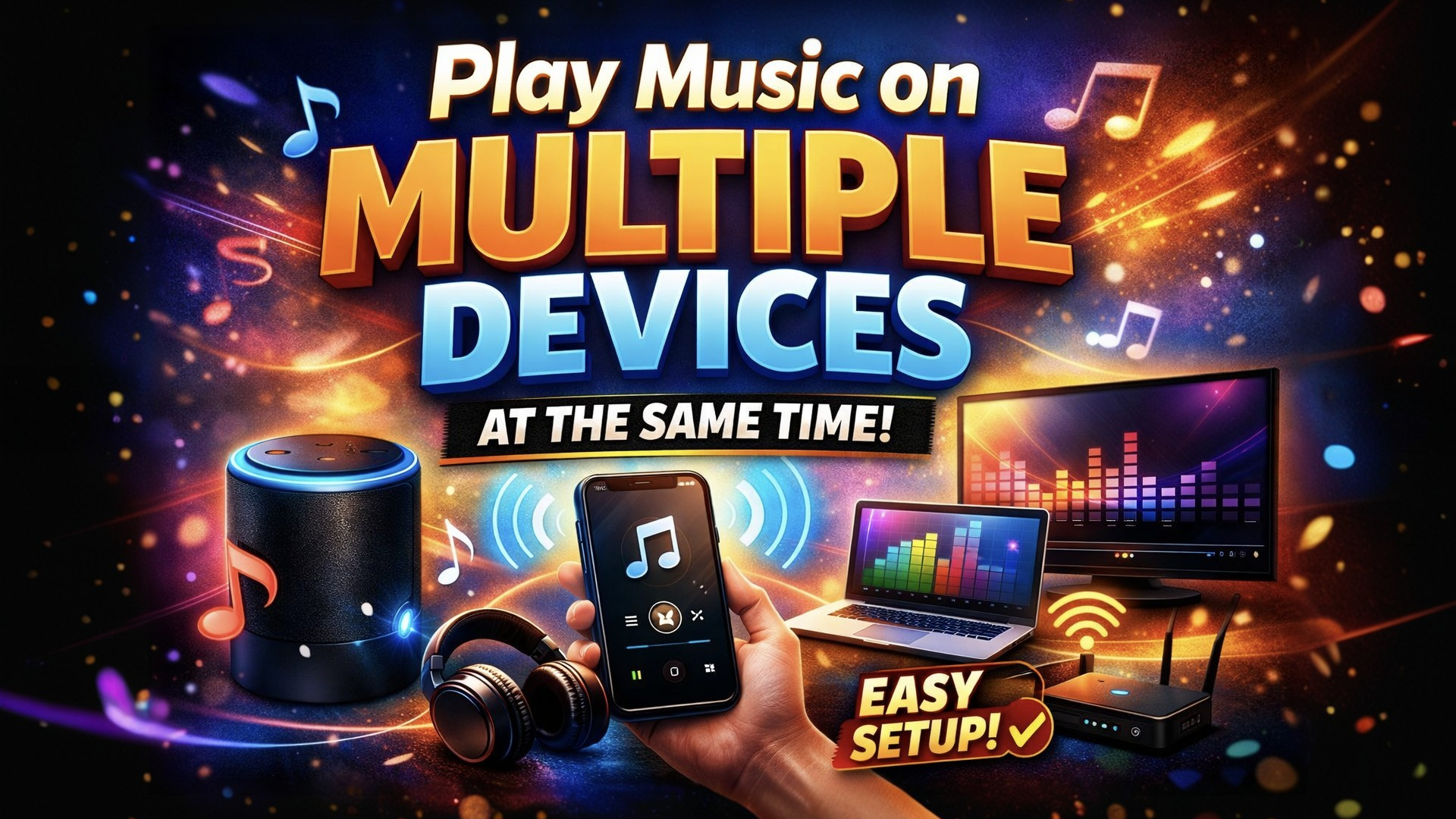
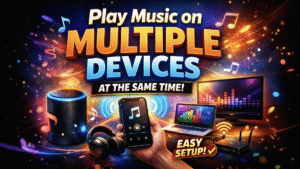
Recall a time when listening to music meant a single speaker in a single space? That era is behind us. Today, our residences are networked hubs teeming with smart televisions, mobile phones, tablets, and wireless sound systems. Delivering audio to numerous gadgets concurrently is no longer an extravagant extra. It’s a fundamental expectation. Play Music on Multiple Devices Simultaneously
Scroll Down To See Download Button
Table of Contents
Listeners desire their audio to accompany them. From the prep area to the sleeping quarters. From the common room to the veranda. Continuously.
And the good news? It’s more accessible than ever before.
Why Distribute Audio Across Multiple Devices?
Let’s consider the practicalities.
If you limit your music to just one gadget, the sound vanishes the instant you exit that room. This disrupts the atmosphere. Multi-device audio playback resolves this immediately.
Here’s why it holds significance:
Comprehensive home coverage
No interruptions during movement
Improved sound dispersal
Perfect for gatherings and festivities
Heightened immersion
Picture it like illumination. Would you illuminate only one corner of a chamber? Of course not. Music functions in precisely the same manner.
How Multi-Room Sound Technology Operates
Fundamentally, multi-device music relies on synchronized delivery. This means every sound output receives identical audio information at the exact same moment.
There are two primary methodologies:
Wi-Fi Transmission
Wi-Fi forms the foundation of contemporary multi-room setups. It facilitates communication between devices via your network router, maintaining flawless synchronization. This approach delivers superior audio fidelity and enhanced dependability.
Bluetooth Transmission
Bluetooth serves well for straightforward configurations. Some equipment supports dual audio output or multi-pairing capabilities. Nevertheless, Bluetooth is subject to range and latency constraints. It offers convenience but isn’t optimal for whole-home systems.
Managing latency is crucial. Even a minor delay can degrade the auditory experience. Modern setups employ buffering and precise timing protocols to eliminate echoes or lags.
Optimal Methods for Playing Music on Multiple Devices
Let’s outline the options.
Utilizing Smart Speakers
Intelligent speakers represent the most straightforward choice.
Most permit the creation of “speaker clusters.” Once assembled, these groups will play the same audio in unison.
Configuration typically takes mere minutes:
Connect speakers to your Wi-Fi network
Launch the accompanying application
Formulate a group
Initiate playback
It’s that simple.
Voice assistants simplify it further. A spoken command can cause music to permeate every space.
Employing Bluetooth Pairing
Certain mobile phones support dual Bluetooth audio. This enables you to link two Bluetooth speakers simultaneously.
What are the drawbacks?
Restricted to two devices
Diminished audio consistency
Potential synchronization issues
It suffices for modest arrangements but not for encompassing an entire dwelling.
Leveraging Streaming Applications
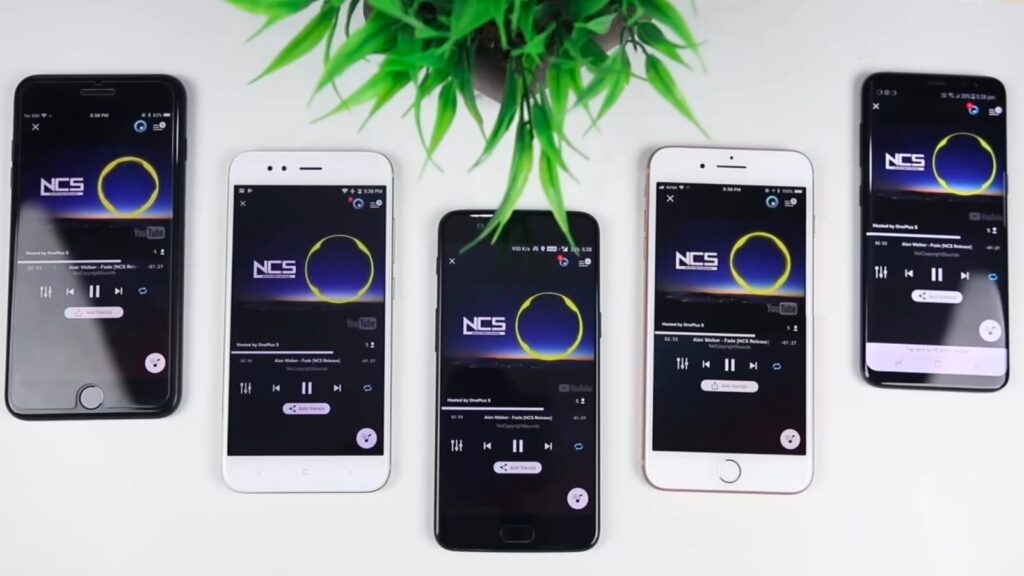
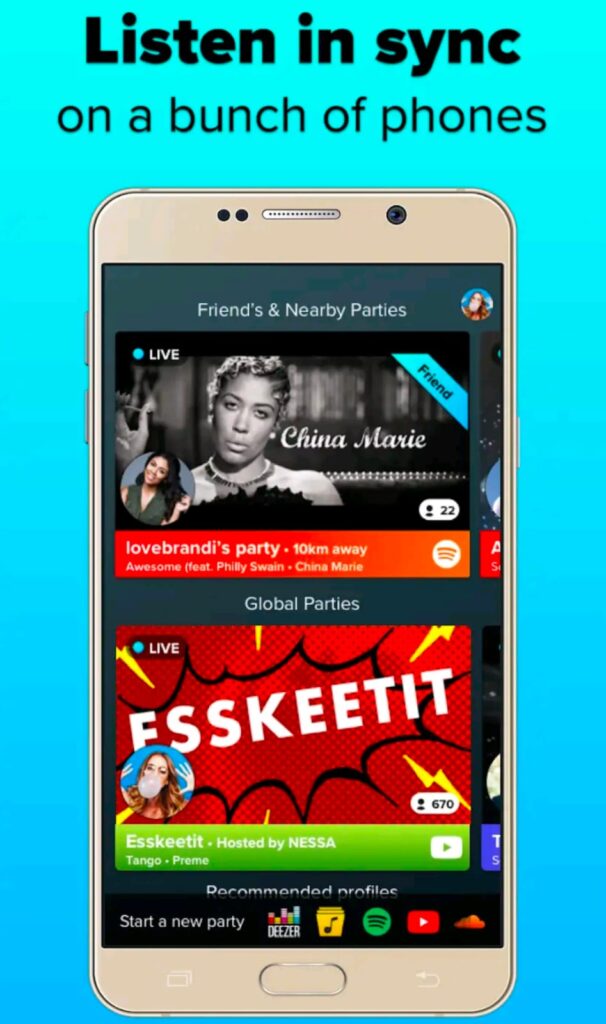
Many music applications now support casting to an array of devices.
You select available sound outputs on your network and designate where audio should emanate. Some frameworks permit individual volume regulation per room. Others offer universal command.
This technique offers versatility and power.
Listen to Different Songs in Each Earbud
Recover Deleted Photos from Mobile
Deploying Audio Splitters and Wired Installations
Wired systems still retain their utility.
Audio splitters distribute sound signals to multiple speakers physically interconnected via cables. This approach guarantees zero latency but necessitates installation labor.
It’s perfectly suited for permanent environments such as offices, dining establishments, or event venues.
Configuring Multi-Device Music Across Various Platforms
Different operating environments provide distinct utilities.
Android Handsets
Many Android phones support dual Bluetooth audio. You can activate this in the Bluetooth settings.
For Wi-Fi-based streaming:
Connect speakers to the identical network
Utilize casting functionalities
Group devices within the application
Straightforward and effective.
iOS Devices
Apple users can leverage AirPlay-compatible equipment.
The steps are intuitive:
Swipe to access the Control Center
Tap the audio output symbol
Choose multiple devices
Synchronization is generally flawless because the entire operation occurs within a unified ecosystem.
Windows and Mac Computers
On personal computers, multi-output devices can be configured via sound preferences.
For sophisticated arrangements:
Employ audio mixer software
Activate multi-output mode
Route audio signals correctly
It demands a degree of technical acumen but grants complete mastery.
Frequent Difficulties and Their Solutions
Let’s address common problems.
Sound Delay
Cause: Insufficient Wi-Fi strength or an overburdened network.
Fix: Upgrade your router or implement a mesh system.
Equipment Failing to Sync
Cause: Incompatible firmware versions.
Fix: Update all devices.
Wi-Fi Instability
Cause: Suboptimal router placement.
Fix: Position the router centrally and mitigate interference.
Should you neglect these fundamentals, the system will not perform optimally. It is precisely that simple.
Optimal Equipment for Multi-Room Audio
Expensive gear is not a prerequisite. However, quality remains important.
Selections include:
Smart speakers
Wi-Fi soundbars
Wireless home cinema systems
Premium devices offer:
Richer bass
More robust connectivity
Advanced synchronization technology
Economical devices function adequately for casual listeners.
Base your selection on your objective.
Wi-Fi Prerequisites for Uninterrupted Streaming
Multi-device music is critically dependent on the caliber of your Wi-Fi.
Here’s what is required:
A minimum of 25 Mbps for stable transmission
A dual-band router
Minimal interference
If your dwelling is expansive, employ a mesh network. It eliminates signal dead zones and maintains connectivity for every device.
Subpar internet equates to a fragmented experience.
Safeguarding Your System and Personal Data
Devices that are networked invariably bring up concerns about security.
Implement:
Robust Wi-Fi passkeys
Up-to-date device software
Dual-factor verification whenever feasible
Refrain from connecting smart speakers to unsecured networks. Safeguard your entire digital environment.
Financial Outlay: Economical vs. High-End Configurations
Economical configuration:
A pair of Bluetooth loudspeakers
Standard network router
Low expenditure
High-end configuration:
Numerous Wi-Fi enabled loudspeakers
Distributed mesh network
Sophisticated sound management
The financial disparity is significant. Yet, the difference in experience is equally profound.
Ponder a singular query:
Is this casual listening or a lasting commitment to audio excellence?
Applications: Residence, Workplace, Gatherings
Residence
Cultivate atmosphere. Unwind as you transition between areas.
Workplace
Introduce gentle ambient sound. Enhance morale and efficiency.
Gatherings
Ensure uniform sound dispersion throughout the venue. Eliminate dead zones.
Synchronized playback across multiple devices converts mundane areas into captivating soundscapes.
Sophisticated Advice for Flawless Synchronization
Aspire to flawless operation?
Maintain identical software versions across all hardware
Restart your internet router every month
Employ wired Ethernet connections for fixed speakers where viable
Refrain from integrating an excessive variety of manufacturers
Uniformity contributes to enhanced reliability.
The Trajectory of Synchronized Audio Playback
The path ahead is evident.
Sound systems are evolving to be more intelligent. AI-driven acoustic fine-tuning, three-dimensional sound mapping, and effortless device transitions are already starting to appear.
Before long, your dwelling will dynamically adapt musical playback according to your movement within it.
This isn’t speculative fantasy. It represents the subsequent evolution of intelligent habitation.
Please wait 10 seconds…
📥 Download NowSummary
Simultaneously playing audio across several devices is no longer an arduous task. The necessary implements are available. The underlying technology is well-established. The configuration is straightforward.
The sole significant choice resides in the extent of your ambition.
Commence modestly with a pair of loudspeakers. Or construct an entire intelligent-home sound environment.
Regardless of your choice, once you savor unified sound filling your surroundings, a return to previous methods will be inconceivable.
Is it possible to stream audio to several Bluetooth speakers simultaneously?
Indeed, this is feasible provided your specific device offers dual audio functionality. Nonetheless, it's important to remember that Bluetooth technology inherently comes with certain restrictions concerning range and synchronization.
When streaming to multiple devices, does Wi-Fi offer superior performance compared to Bluetooth?
Absolutely. Wi-Fi inherently provides enhanced coverage, greater connection stability, and more precise audio timing across devices.
Is it essential to use speakers from the identical manufacturer?
It's not strictly necessary in every scenario. However, opting for components within the same brand ecosystem typically leads to better integration and optimized operational efficiency.
Could streaming content to numerous devices simultaneously negatively impact my internet speed?
While it does consume a certain amount of your available bandwidth, a robust and sufficiently fast internet connection should manage this activity without any noticeable issues.
Is it possible to manage the audio volume independently for different rooms?
Certainly. The vast majority of modern smart speaker setups are designed to offer granular control over volume levels in individual zones or rooms.